mazdek AI, Explained: Every Feature of the Kurdish Language Platform (2026 Guide)
One account, eleven tools for Kurdish: an AI assistant, translation across 255 languages, document OCR, natural voices, transcription, a live interpreter, video clips, song generation, a spell checker, a community and a daily news brief — what each one does, who it is for, and what the plans include.
Most language tools treat Kurdish as an afterthought — one dialect if you are lucky, a robotic voice, no understanding of Kurdish names or history. mazdek AI was built the other way round: Kurdish first, in all three major dialects, with the rest of the world's languages around it.
This guide walks through every part of the platform — what each tool does, who it is for, and what you get on the free and paid plans. Each section has a short clip of the real product in your language.
One account, eleven tools
| Tool | What it does | Kurdish dialects | Where |
|---|---|---|---|
| AI assistant | Chat in Kurdish, ask about Kurdish topics, work with your files | Kurmancî · Soranî · Kirmanckî | Web · iOS · Android |
| Werger (translate) | Text and speech between 255 languages | yes | Web · iOS · Android |
| Belge (documents) | Photos, scans and PDFs → editable, translatable text | yes | Web · iOS · Android |
| Deng (voices) | Natural Kurdish text-to-speech, 1,200+ voices | yes | Web · iOS · Android |
| Studio (transcription) | Audio and video → text, subtitles, translation | yes | Web · iOS · Android |
| Live interpreter | Two-way spoken interpretation in real time | yes | Web · iOS · Android |
| Klîp (video clips) | A long video → short vertical clips with captions | yes | Web · iOS · Android |
| Stran (songs) | Your lyrics → a full song with vocals, in Kurdish styles | yes | Web · iOS · Android |
| Rastnivîs (spell checker) | Spelling, punctuation and missing î ê û ş ç, plus AI grammar | yes | Web · iOS · Android |
| Civat (community) | A feed and direct messages that translate between languages | yes | Web · iOS · Android |
| Rojev (daily brief) | A spoken news bulletin every morning, 15 languages | yes | Web · iOS · Android · podcast apps |
Everything shares one login, one set of allowances and one history: a document you scan in Belge can be translated in Werger, read aloud by Deng and discussed with the assistant without leaving the app.
The AI assistant: a Kurdish-speaking mazdek AI
The assistant is the heart of the platform. Ask it anything, in any of the three dialects or in 13 other interface languages, and it answers in the language you used — with correct Kurdish grammar, not a machine-translated approximation.
What sets it apart:
- A Kurdish knowledge base. Questions about Kurdish history, culture, places and current events are answered from a library of Kurdish news and books, with the source shown, instead of from guesswork.
- Files and photos. Drop in a PDF, a photo of a page or an audio file and ask questions about it; scanned Kurdish documents are read automatically.
- Projects. Group chats and files by topic — a thesis, a court case, a family archive — so the assistant only looks at what belongs together.
- Memory. It remembers the facts you choose to keep (your dialect, your job, your project) across conversations; you can see and delete every one of them.
- Voice mode. Talk instead of typing and hear the answer read back in a Kurdish voice.
- Read aloud, export, share. Any answer can be spoken, exported as a document or shared with a link.
Who it is for: students and teachers, journalists, anyone writing in Kurdish, and diaspora families who want to ask about home in their own language.
Werger: translation across 255 languages
Werger is a translator built around Kurdish rather than bolted onto it. Kurdish pairs are handled by the strongest model we run, because Kurdish grammar — the izafe, the copula, the two scripts — is exactly where general translators fall apart.
- 255 languages, including every language the Kurdish diaspora lives in.
- Speak and listen. Dictate the source, hear the translation in a natural voice.
- Summarise. Long text can be condensed before or after translation.
- Soranî in Latin letters. Read Soranî output transliterated into the Latin alphabet if you cannot read the Arabic script.
Who it is for: anyone moving between Kurdish and Turkish, Arabic, Persian, German, English, Swedish — at work, at school or at home.
Belge: scanned documents, photos and PDFs
Kurdish has a century of printed material and very little of it is searchable. Belge reads it:
- Photos and scans of books, letters, forms and street signs; PDFs that are only images.
- Six document languages: Kurmancî and Kirmanckî (Latin script), Soranî, Arabic, Farsi, Turkish and English — you choose the document's language, not the app's.
- Then do something with it: translate, summarise, read aloud, or hand it to the assistant to ask questions.
- Multi-page documents are processed in the background; you can keep working.
Who it is for: students with old textbooks, families with letters and certificates, archives, lawyers and translators.
Deng: natural Kurdish voices
Deng turns text into speech that sounds like a person, not a robot — and, unusually, does it for all three dialects.
- Own models for Kurmancî/Kirmanckî and for Soranî, trained on studio recordings; 1,200+ voice identities to choose from.
- 80+ other languages through a multilingual engine, metered separately.
- Download the audio (MP3/WAV), keep a library, share a listening link.
- Voice cloning from a short recording, so a text can be read in a familiar voice.
- Everywhere in the app: read a chat answer, a translation or a scanned page aloud with one tap.
The full guide to Kurdish text-to-speech explains how the voices are built and how much audio each plan gives you.
Who it is for: teachers, content creators, accessibility users, and anyone learning to read Kurdish.
Studio: audio and video to text
Studio is speech-to-text for Kurdish that copes with real recordings — a phone on a kitchen table, an old TV tape, a crowded interview.
- Kurmancî, Soranî, Kirmanckî with dedicated models; about 90 other languages.
- Clean-up before transcription: music and background voices are separated out, noise is reduced, long files are cut at natural pauses.
- A grammar pass for Kurdish text afterwards, so names and sentences come out right.
- Correct inline, translate, export as TXT, DOCX, SRT, VTT or JSON, or share a read-only link.
- Files up to 500 MB, video included; record directly in the app; paste a public video link.
The step-by-step transcription guide covers plans, subtitles and tips for noisy audio.
Who it is for: journalists, researchers, students, media archives, families with voice messages.
Live interpreter: two people, two languages, one conversation
The live interpreter is for the moments where a written translation is too slow: a doctor's appointment, a municipal office, a school meeting, a phone call between a grandmother in Amed and a grandchild in Stockholm.
- Two-way speech: speak in Kurdish, the other person hears their language, and back.
- Face-to-face mode on one phone, with the screen split so each side reads their own language.
- Invite by QR code or link so the other person joins from their own device — no account needed for the guest.
- Spoken output in a natural voice, plus the written transcript of the whole conversation.
- Included on every plan with a monthly allowance of minutes — 15 on Free, 60 on Pro, 180 on Max.
Who it is for: clinics, social services, schools, businesses with Kurdish-speaking customers, and families.
Klîp: short vertical clips from a long video
Kurdish media is full of long recordings — interviews, panels, podcasts, live streams — while the audience is on TikTok, Reels and Shorts. Klîp cuts the short clips for you.
- Start from a file or a link. Upload a video or paste a public link (YouTube, X, Facebook, TikTok…); uploads continue in the background.
- Find the moments. Free markers show where people speak, where the scene changes and where the energy peaks. On Pro and Max, AI reads the Kurdish transcript and proposes the best moments, each with a title, a score and a reason.
- Frame the speaker. Five layouts — vertical, split, trio, spotlight, centered — with face tracking on every plan; on paid plans the frame follows whoever is speaking.
- Karaoke captions in Kurmancî and Soranî that highlight each word as it is spoken, translatable into 255 languages.
- Dubbing into another language with the speaker's own cloned voice, on Max.
- Render and share: download the MP4, post it to Civat or send a link that opens without an account.
The Kurdish video clips page shows the tool in action.
Who it is for: journalists, TV and podcast teams, content creators, organisations with recorded events.
Stran: your lyrics as a finished song
Stran turns words into music. Write your lyrics — or give a topic and let mazdek AI write them — pick a style, and a song with vocals and instruments is ready in a few minutes.
- Kurdish styles, researched one by one: dengbêj, govend, lorî, heyran, şîn, saz ballad, Kurdish pop and more — alongside general styles such as pop, rock, acoustic and hip-hop.
- Sung word for word in Kurmancî, Soranî, Kirmanckî or 20+ other languages; structure the lyrics with [Verse] and [Chorus], or choose instrumental.
- Two modes. Standard covers every style with a generous monthly allowance; Awaza Kurdî is the premium mode for the most authentic Kurdish sound.
- Share it: keep the song private, send a listening link, publish it in Discover, collect songs in playlists, or export a lyric video for social media.
- Every song is labelled as AI-generated, and songs cannot imitate a specific artist.
The Kurdish song generator page has examples to listen to.
Who it is for: poets and lyricists, teachers, families preparing a wedding or a birthday, anyone who wants to hear their own words sung in Kurdish.
Rastnivîs: the Kurdish spell checker
Rastnivîs checks Kurdish text as you type — built from Kurdish dictionaries, not adapted from another language.
- Kurmancî, Soranî (Arabic and Latin script) and Kirmanckî (beta); the same editor checks 85+ other languages.
- Missing letters restored in one tap: text typed without Kurdish keys gets its î, ê, û, ş and ç back — kurdistan becomes Kurdistanê.
- Rêziman: AI grammar suggestions you accept or reject one by one.
- Word files: open a .docx, correct it and download it again as Word.
- A personal dictionary for names and words you never want flagged.
- Spelling, punctuation and diacritic checks are free on every plan; AI grammar uses your translation allowance.
Try it on the Kurdish spell checker page.
Who it is for: writers, editors, students, teachers, and anyone typing Kurdish on a keyboard without Kurdish letters.
Civat: a community where everyone writes in their own language
Civat is the social side of mazdek AI: a feed for posts, voice posts, songs and clips, and direct messages that are translated automatically.
- Translated messages. You write in your language, the other person reads theirs — the original stays visible above the translation. Voice messages are transcribed and translated too.
- Find language partners in Discover; being listed there is opt-in.
- Private by choice: private profiles, follower approval, blocking and reporting; reported content is reviewed within 24 hours.
Who it is for: families and friends spread across countries and languages, language learners, and creators sharing what they make with the other tools.
Rojev: a Kurdish news brief every morning
Rojev is a daily spoken bulletin produced with the same voices — a few minutes of the day's Kurdish news, written and read in 15 languages, published every morning on the web, in the apps and as a podcast on Apple Podcasts and Spotify. Every episode has a transcript, chapter markers and a shareable page, so you can listen on the way to work or read it in the interface language you prefer.
The apps: web, iPhone, Android — one account
Everything above runs on the web at mazdek.ai and in the native iOS and Android apps, on one account. The interface is available in 16 languages — Kurmancî, Soranî, Kirmanckî, Turkish, Arabic, Persian, English, German, French, Italian, Spanish, Dutch, Swedish, Russian, Armenian and Syriac — and mirrors correctly for right-to-left scripts. On a phone you can share an audio file, a photo or a link from any app straight into mazdek AI.
| Where | How to get it |
|---|---|
| iPhone / iPad | Download on the App Store |
| Android | Get it on Google Play |
| Web app (PWA) | Open mazdek.ai in Chrome, Edge or Safari and choose Install / Add to Home Screen — it installs like an app, opens full-screen, works on desktop and phone, and receives updates instantly with no store |
| Any device | mazdek.ai/get sends you to the right store automatically |
The web app (PWA) is worth knowing about: no download from a store, the same account and features, and it runs on Windows, macOS, Linux and Chromebooks as well as phones — useful for classrooms, offices and older devices.
Beyond the app: Telegram, Claude and the API
- Telegram. The bot @mazdekaibot translates text, transcribes voice notes and answers in a spoken voice inside Telegram; link your account to use your own plan, or open the Mini App to run mazdek AI without leaving Telegram.
- Claude and other AI assistants. mazdek AI is listed in Claude's connector directory and runs as an MCP server, so an assistant can call Kurdish translation, spell checking and transcription directly — see the connector guide.
- API. The same engines are available to developers as a pay-per-use REST API — documentation.
Plans at a glance
| Free | Pro $19.99/mo | Max $79.99/mo | |
|---|---|---|---|
| AI assistant | yes | yesmore capacity, web search | yesmost capacity, web search |
| Kurdish speech (Deng) | 40,000 chars/mo | 750,000 chars/mo | 3,000,000 chars/mo |
| Multilingual speech | 5,000 chars/mo | 20,000 chars/mo | 40,000 chars/mo |
| Transcription (Studio) | 10 min/mo | 180 min/mo, 90 min per file | 540 min/mo, 180 min per file |
| Translation (Werger) | 12,000 chars/mo | 300,000 chars/mo | 1,000,000 chars/mo |
| Documents (Belge) | with credit | 100 pages/mo | 200 pages/mo |
| Live interpreter | 15 min/mo | 60 min/mo | 180 min/mo |
| Video clips (Klîp) | 120 min of video/mo, watermark | 600 min/mo, AI moments and captions | 2,400 min/mo, plus dubbing |
| Songs (Stran) | 30 Standard/mo | 150 Standard + 30 Awaza Kurdî/mo | 500 Standard + 100 Awaza Kurdî/mo |
| Spell checker (Rastnivîs) | yes | yes | yes |
| Rojev daily brief | yes | yes | yes |
Allowances are per month and may change — the pricing page always shows the current numbers. Enterprise adds volume, a data-processing agreement and onboarding — talk to us. Prices on the App Store and Google Play differ slightly from the web.
Start here
Try the assistant, translation, voices, transcription and the spell checker on the demo page without an account, then create a free account — no card required — and pick up the same work on the web, iPhone or Android.
Frequently asked questions
- Is mazdek AI free?
- Yes, there is a free plan with no card required: the AI assistant, 40,000 characters of Kurdish speech, 12,000 characters of translation, 10 minutes of transcription, 15 minutes of live interpreting, 30 Standard songs, video clips with a watermark and the spell checker every month. Pro ($19.99) and Max ($79.99) raise every allowance and add AI clip moments, Awaza Kurdî songs and document pages.
- Which Kurdish dialects does it support?
- Kurmancî (Latin script), Soranî (Arabic script) and Kirmanckî/Zazakî — for the assistant, translation, speech-to-text, text-to-speech, OCR and the live interpreter. The interface itself is available in 16 languages.
- Do I need different apps for different tools?
- No. Everything lives in one account on the web, iOS and Android. Your chats, transcripts, translations, documents, voices, clips and songs sync between them.
- Does the AI assistant actually know Kurdish topics?
- Yes. Besides speaking Kurmancî, Soranî and Kirmanckî natively, it can draw on a Kurdish knowledge base built from Kurdish news and books, so questions about Kurdish history, culture and current events get grounded answers rather than guesses.
- Can I make Kurdish songs and short video clips with it?
- Yes. Stran turns your lyrics into a full song with vocals in Kurdish styles such as dengbêj, govend and lorî, and Klîp cuts a long video into short vertical clips with Kurmancî and Soranî karaoke captions. Both are included in the free plan with a monthly allowance; paid plans add the premium Awaza Kurdî song mode, AI moment selection and dubbing.
- Where is my data stored?
- mazdek AI is operated by mazdek GmbH in Switzerland under GDPR. Your files and audio live in a private bucket served only through short-lived signed links, and you can delete individual items or your whole account at any time.
- Can I use it for my organisation?
- Yes. Enterprise plans add volume, an API, a data-processing agreement and onboarding support — contact us through the sales page.
Related articles
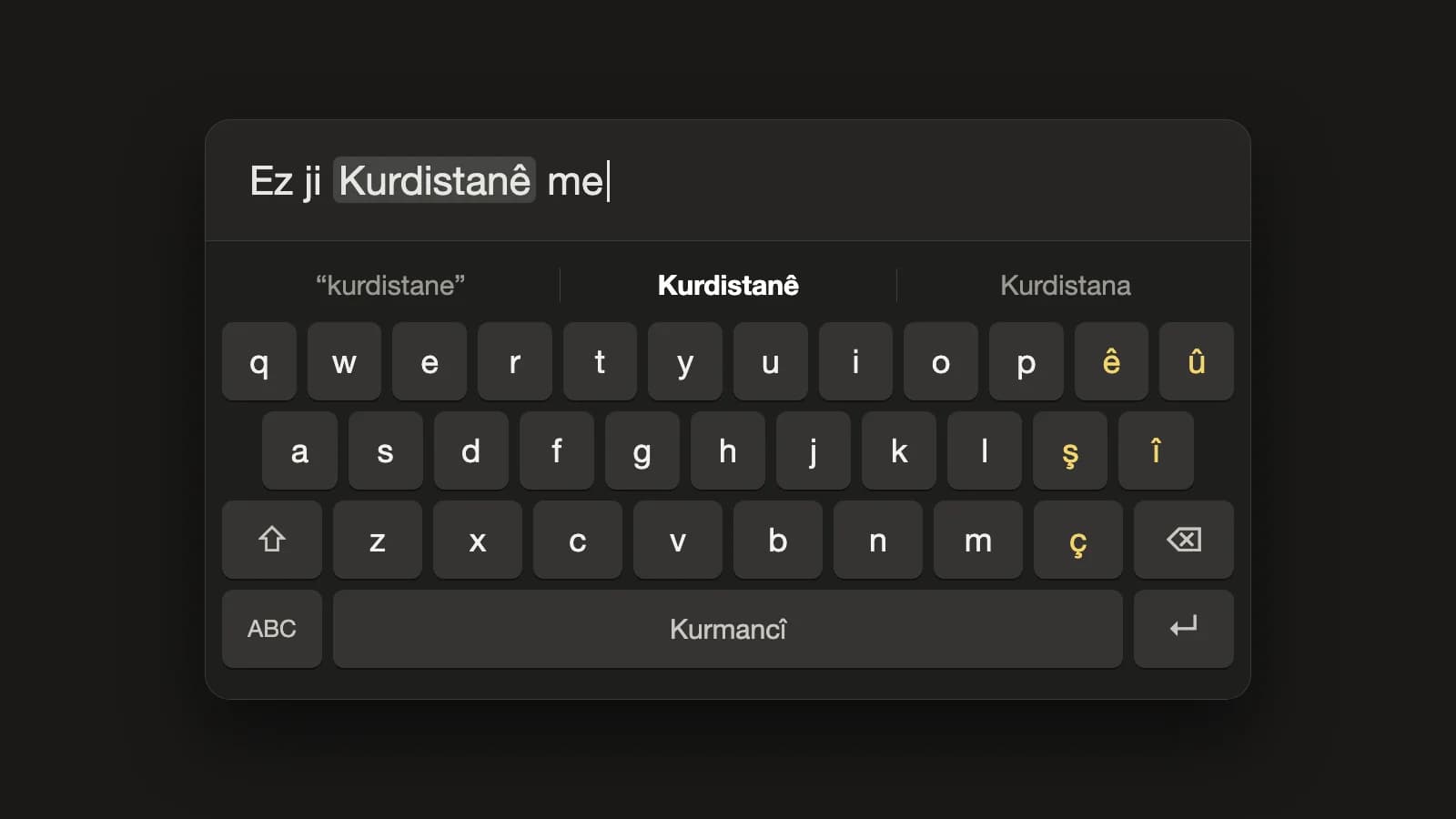
mazdek AI Keyboard: a Kurdish keyboard for iPhone and Android that adds the missing letters for you
A Kurdish system keyboard is now part of the mazdek AI app. Kurmancî, Soranî and Kirmanckî layouts, word suggestions, and autocorrect that turns “kurdistane” into “Kurdistanê” — in WhatsApp, Instagram, Telegram and every other app. Everything runs on the phone; nothing you type leaves it.
- #kurdish-keyboard
- #kurmanci
- #sorani
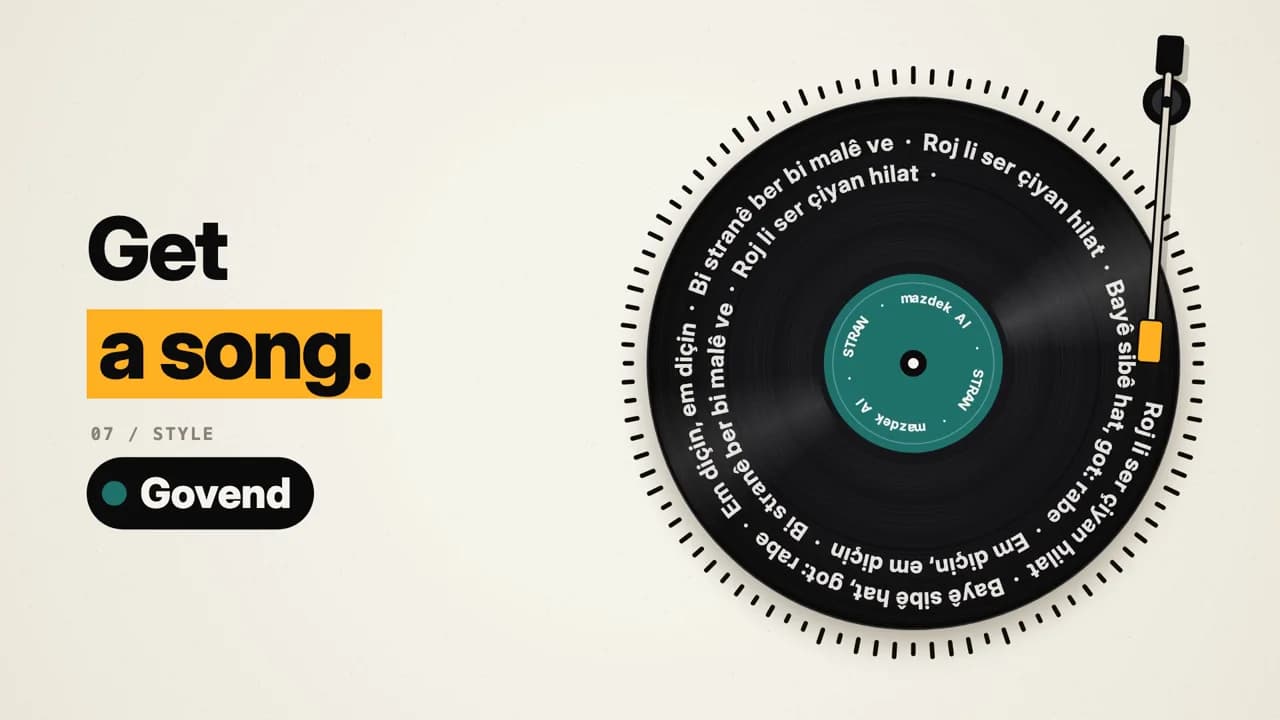
How to Turn Your Lyrics into a Kurdish Song with AI (Dengbêj, Govend, Lorî) in 2026
A practical guide to making a full Kurdish song from your own lyrics: how to structure verses and a chorus, which Kurdish styles to pick — dengbêj, govend, lorî, heyran, saz ballad — what the Standard and Awaza Kurdî modes are for, and what the free and paid plans include.
- #song-generator
- #kurdish-music
- #dengbej
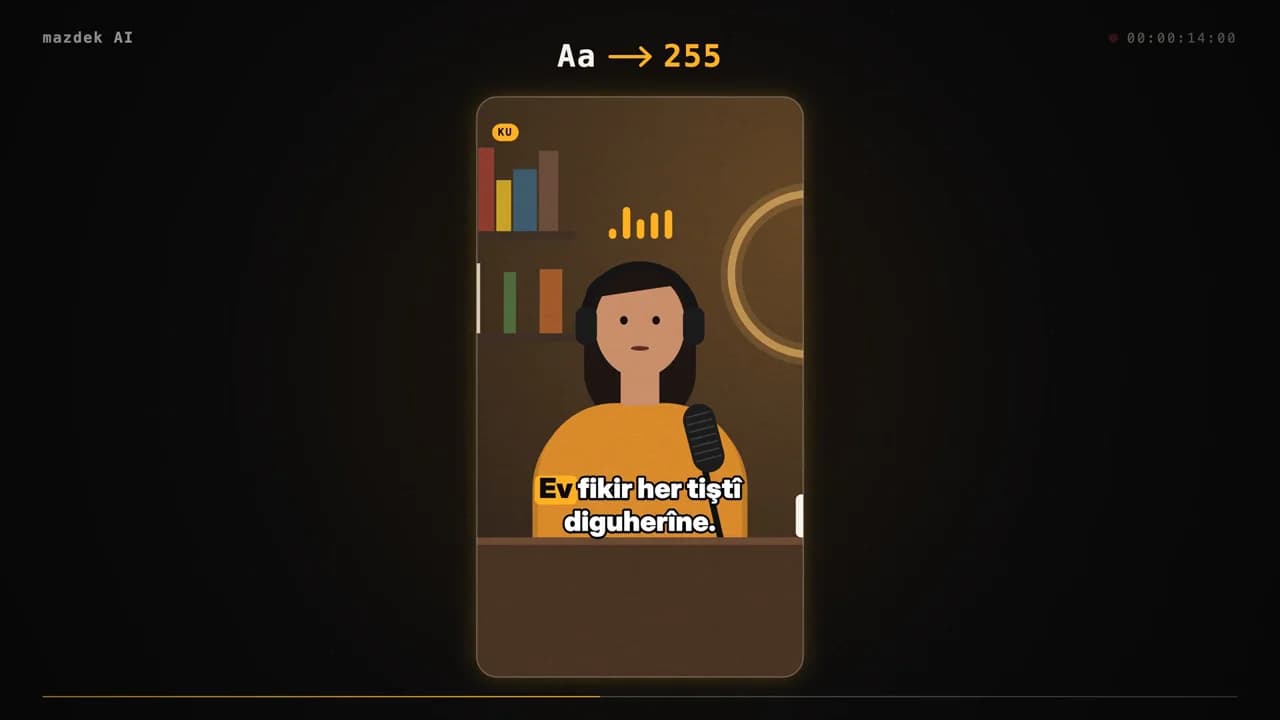
How to Turn a Long Kurdish Video into Short Vertical Clips (TikTok, Reels, Shorts) in 2026
A practical guide to cutting short vertical clips from a long Kurdish interview, podcast or stream: how AI finds the best moments, how Kurmancî and Soranî karaoke captions work, which layouts fit which platform, and what the free and paid plans include.
- #video-clips
- #short-video
- #subtitles